

I. Introduction
In the modern era of energy consumption and conservation, high-efficiency inverter solutions with advanced technology have emerged as a game-changer. Inverters, which convert direct current (DC) to alternating current (AC), are essential components in various applications, including renewable energy systems, industrial processes, and residential power management. The integration of advanced technologies into inverter design has led to significant improvements in efficiency, performance, and reliability, enabling more sustainable and intelligent use of electrical energy. This article explores the world of high-efficiency inverter solutions, delving into the cutting-edge technologies that power them, their diverse applications, and the impact they have on energy consumption and the environment.
II. Advanced Technologies Driving Inverter Efficiency
1. Wide Bandgap Semiconductors: One of the most significant technological advancements in inverter design is the use of wide bandgap semiconductors such as silicon carbide (SiC) and gallium nitride (GaN). These materials offer several advantages over traditional silicon-based semiconductors. They have a higher breakdown voltage, allowing inverters to handle higher power levels without the need for complex and bulky voltage multiplier circuits. SiC and GaN devices also exhibit lower on-resistance, which reduces conduction losses during operation. Additionally, their faster switching speeds enable higher-frequency operation, leading to more compact and efficient inverter designs. For example, in a solar power inverter, the use of SiC-based power modules can increase the conversion efficiency by several percentage points, translating into greater energy harvest from solar panels.
2. Digital Signal Processing and Advanced Control Algorithms: Modern inverters incorporate powerful digital signal processors (DSPs) that implement advanced control algorithms. Pulse-width modulation (PWM) techniques have been refined to minimize harmonic distortion and improve the quality of the AC output waveform. Space vector modulation (SVM) is another widely used algorithm that optimizes the switching patterns of power semiconductor devices, further enhancing efficiency and power density. These control algorithms also enable features such as power factor correction, reactive power control, and grid synchronization. In industrial motor drive inverters, DSP-based control allows for precise speed and torque control of motors, improving their energy efficiency and overall performance.
3. Soft-Switching and Resonant Topologies: Soft-switching techniques, such as zero-voltage switching (ZVS) and zero-current switching (ZCS), have been developed to reduce the switching losses in inverters. By carefully timing the turn-on and turn-off of power semiconductor devices, the energy dissipated during the switching transitions is minimized. Resonant topologies, such as LLC resonant converters, are also being increasingly used. These topologies utilize the resonance phenomenon to achieve soft-switching conditions, leading to higher efficiency, especially in applications with a wide load range. For instance, in high-power battery chargers, resonant inverters can provide efficient and fast charging while minimizing heat generation.
4. Magnetic Component Design and Integration: The design of magnetic components, such as inductors and transformers, has also evolved to improve inverter efficiency. High-permeability magnetic materials and advanced winding techniques are employed to reduce core losses and winding resistance. Additionally, the integration of magnetic components with power semiconductor devices and control circuits in a single module, known as power electronics building blocks (PEBBs), reduces parasitic inductances and capacitances, enhancing overall system efficiency and power density. This modular approach simplifies the design and assembly process, making it easier to manufacture and maintain high-efficiency inverters.
III. Applications of High-Efficiency Inverter Solutions
1. Renewable Energy Systems: In solar photovoltaic (PV) and wind energy generation, inverters are crucial for converting the DC power produced by the energy sources into AC power that can be fed into the grid or used to power local loads. High-efficiency inverters ensure that the maximum amount of energy is extracted from the renewable sources. They also provide grid support functions, such as voltage and frequency regulation, to maintain the stability of the power grid. In large-scale solar farms, advanced inverters with maximum power point tracking (MPPT) algorithms continuously adjust the operating conditions of the PV panels to optimize power generation, even under varying environmental conditions.
2. Industrial Automation and Motor Drives: In industrial settings, inverters are widely used to control the speed and torque of electric motors. High-efficiency inverter drives improve the energy efficiency of industrial processes, such as pumps, fans, compressors, and conveyor belts. By enabling variable speed operation, motors can operate at the most efficient speed for the given load, reducing energy consumption and wear and tear. In addition, inverters with advanced control features can provide precise control of motor performance, enhancing the quality and productivity of industrial operations.
3. Uninterruptible Power Supplies (UPS): UPS systems are essential for providing backup power in critical applications, such as data centers, hospitals, and telecommunications facilities. High-efficiency inverters in UPS units ensure that the stored DC power is efficiently converted to AC power during power outages. This not only extends the backup time but also reduces the energy consumption and heat generation during normal operation. Advanced UPS inverters also offer features such as fast switching times, high power quality, and seamless transition between grid power and battery power, ensuring the continuous and reliable operation of critical loads.
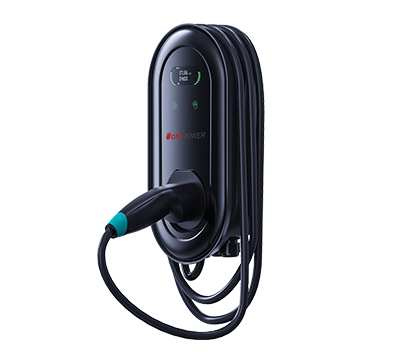
4. Electric Vehicle (EV) Charging Infrastructure: As the demand for EVs grows, the need for efficient and fast charging infrastructure becomes crucial. Inverter-based EV chargers are used to convert the AC power from the grid to the DC power required to charge the vehicle's battery. High-efficiency inverters in chargers can reduce charging time and energy losses, making EV charging more convenient and cost-effective. Some advanced EV chargers also support bidirectional power flow, allowing the vehicle's battery to supply power back to the grid during peak demand periods, further enhancing the overall energy efficiency and grid stability.
IV. Benefits and Impact on Energy Consumption and the Environment
1. Energy Savings: The primary benefit of high-efficiency inverter solutions is the significant reduction in energy consumption. By improving the conversion efficiency from DC to AC, less power is wasted during the process. In industrial applications, this can lead to substantial cost savings on electricity bills. For example, in a manufacturing plant with numerous motor-driven equipment, the use of high-efficiency inverter drives can result in energy savings of 20-30% or more, depending on the application and operating conditions. In the long run, these energy savings contribute to a more sustainable use of energy resources and reduced dependence on fossil fuels.
2. Reduced Environmental Impact: Lower energy consumption means a reduced carbon footprint. High-efficiency inverters play a crucial role in promoting the use of renewable energy sources by improving the efficiency of power conversion and integration into the grid. This helps to reduce greenhouse gas emissions and mitigate the impact of climate change. In addition, the improved efficiency of inverters in various applications also reduces the need for additional power generation capacity, further conserving natural resources and minimizing environmental pollution.
3. Enhanced System Performance and Reliability: Advanced inverter technologies not only improve efficiency but also enhance the overall performance and reliability of electrical systems. The precise control and monitoring capabilities provided by DSP-based control algorithms and advanced features such as soft-switching and fault detection improve the stability and durability of inverters. This leads to fewer breakdowns and maintenance requirements, reducing downtime and improving the productivity and reliability of industrial processes and other applications.
V. Challenges and Future Trends
1. Cost Reduction and Market Adoption: While the benefits of high-efficiency inverter solutions are clear, the initial cost of advanced technologies, such as wide bandgap semiconductors and complex control systems, can be a barrier to widespread market adoption. Manufacturers are working on reducing the cost of these components through economies of scale and technological advancements. As the cost decreases, more industries and consumers will be able to afford and benefit from high-efficiency inverters.
2. Integration with Smart Grids and Energy Storage: The future of energy management lies in the integration of inverters with smart grids and energy storage systems. Inverters will need to be designed to support bidirectional power flow, communicate with the grid and other energy management systems, and provide grid services such as frequency regulation and voltage support. The development of standards and protocols for grid integration and the optimization of control strategies for hybrid energy systems will be key areas of research and development.
3. Cybersecurity and Data Privacy: With the increasing connectivity and automation of inverter systems, cybersecurity becomes a critical concern. Inverters are vulnerable to cyberattacks, which can disrupt power supply, cause damage to equipment, and compromise data privacy. Manufacturers and system integrators need to implement robust cybersecurity measures, such as encryption, authentication, and intrusion detection systems, to protect inverter systems from malicious attacks.
VI. Conclusion
High-efficiency inverter solutions with advanced technology are at the forefront of the energy revolution, enabling more sustainable and intelligent use of electrical energy. The integration of wide bandgap semiconductors, advanced control algorithms, soft-switching techniques, and other innovations has led to significant improvements in inverter efficiency, performance, and reliability. These inverters are finding applications in various sectors, from renewable energy generation to industrial automation and EV charging, with far-reaching benefits in terms of energy savings, reduced environmental impact, and enhanced system performance. As technology continues to advance and challenges are addressed, high-efficiency inverters will play an even more critical role in shaping the future of energy management and the transition to a cleaner and more sustainable energy future.




 German
 Italian
 Japanese
 Global (English)
 Chinese
 Spanish
 French


